
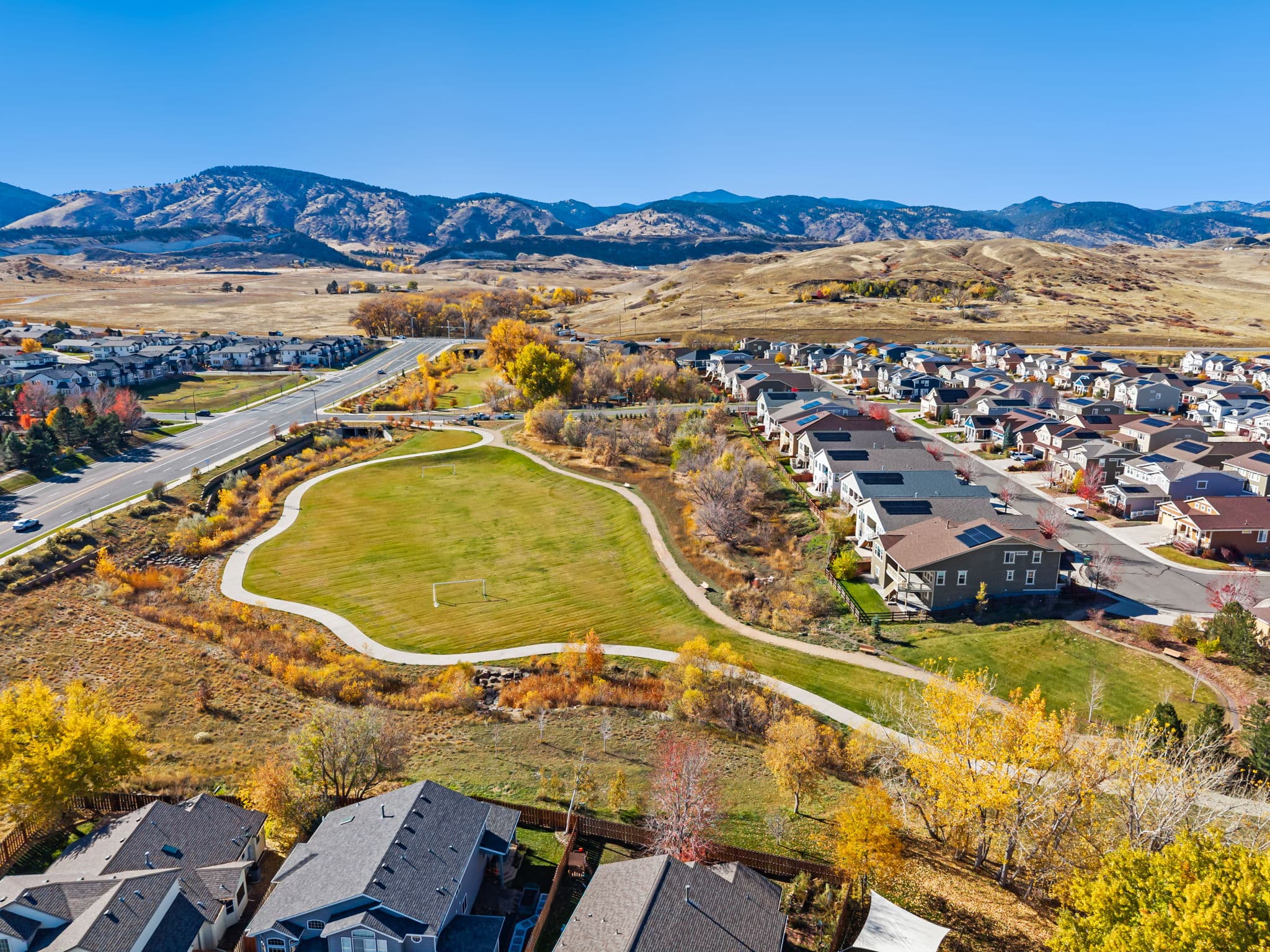
Best Suburbs of Denver: Where to Look Beyond the City
Denver's suburbs aren't all the same — each one has its own character, commute time, and tradeoffs. Here's a guide to the ones I know best and recommend most often.
Not everyone wants to live in the city, and Denver's suburbs have a lot to offer: more space, lower prices, and mountain access. But the best suburbs of Denver aren't interchangeable. Each one has its own character, commute time, and tradeoffs. Here's my guide to the ones I know best and recommend most often. (On schools: I don't rank districts. That research is yours to do, and Colorado's SchoolView has the data. What I'll give you is the ground-level picture.)
Arvada
Arvada is my top recommendation when the priorities are value, walkability, and an easy commute. It strikes a balance few suburbs manage: quiet residential streets with the city still in easy reach, and your dollar goes further here than in Denver proper. Olde Town's walkable downtown has the charm of a small city, and the G Line light rail gets you to Union Station in about 25 minutes. Housing ranges from affordable mid-century ranches to new construction. The trade-off is size: outside Olde Town, Arvada spreads out fast, and most daily errands mean getting in the car.
- Commute to downtown Denver: 25–35 minutes by car or G Line light rail
- Price range: $450K–$1.2M. More affordable than most NW Denver neighborhoods
- Why buyers pick it: Entry-level price points, walkable Olde Town, G Line straight to Union Station,
Golden
Golden is where the suburbs end and the mountains begin. Clear Creek, Table Mountain, and a walkable downtown give Golden a lifestyle that's unique among Denver suburbs. It's ideal for outdoor enthusiasts who want mountain access without the mountain commute.
- Commute to downtown Denver: 30–45 minutes via 6th Avenue or I-70
- Price range: $525K–$2M. Premium for downtown-adjacent and mountain-view properties
- Why buyers pick it: Trails and the creek right out the door, a walkable downtown, true foothills scenery
Lakewood
Lakewood is Denver's largest western suburb and one of its most diverse in terms of housing and price points. Green Mountain offers hiking and biking, Belmar provides a walkable shopping center, and the W Line light rail connects to downtown. Go in knowing that much of the affordable inventory is older stock that needs updating, so budget for some work.
- Commute to downtown Denver: 20–35 minutes by car or W Line light rail
- Price range: $400K–$1.1M. One of the most affordable suburbs this close to Denver
- Why buyers pick it: Some of the best value this close to downtown, W Line light rail, Green Mountain trails
Wheat Ridge
Wheat Ridge is the sleeper pick. It's more affordable than almost anywhere this close to NW Denver, has a growing food and brewery scene on 38th Avenue, and gives you quick access to the I-70 for mountain trips. The Clear Creek trail runs through town.
- Commute to downtown Denver: 15–25 minutes
- Price range: $425K–$950K. Among the best values in the metro
- Why buyers pick it: Value pricing near NW Denver, larger lots, the 38th Avenue food and brewery scene, I-70 at your doorstep for mountain trips
Edgewater
Edgewater is tiny (about 0.7 square miles) but strategically positioned next to Sloan's Lake. The Edgewater Public Market has become a food hall destination, and the whole city is walkable end to end. Homes are modest but affordable for the location. Edgewater feels has an older suburb feel to it similar to Berkeley and Sloans.
- Commute to downtown Denver: 15–20 minutes
- Price range: $425K–$900K. Below Sloan's Lake prices with similar access
- Why buyers pick it: NW Denver proximity at a lower price point, Sloan's Lake next door, a food hall within walking distance
Littleton
Littleton is the south metro's standout, and downtown is the reason. Main Street is a real nineteenth-century historic district, not a themed reconstruction: independent restaurants, antique shops, a farmers market, and the Littleton Museum in original buildings, with the downtown light rail station steps away. Beyond Main Street, the Mary Carter Greenway runs along the South Platte through town, and Chatfield State Park's reservoir is minutes south.
Two things to know going in: the light rail ride downtown runs 40–50 minutes (car-free, but not fast), and school district boundaries here vary at the address level more than in most metro cities, so verify the district for any specific house before you commit.
- Commute to downtown Denver: 25–40 minutes by car; 40–50 by light rail
- Price range: $475K–$1.3M
- Why buyers pick it: A walkable historic Main Street, light rail access, the Mary Carter Greenway trail
Evergreen
Evergreen is the wildcard: mountain living within commuting distance. If you can work remotely or handle a 35–55 minute drive, Evergreen offers pine forests, Evergreen Lake, and a much quieter pace than the metro.
- Commute to downtown Denver: 35–55 minutes via I-70 or Highway 74
- Price range: $575K–$3M. Wide range depending on acreage and views
- Why buyers pick it: Full mountain living within commuting distance, acreage and privacy, Evergreen Lake and trail access
How to Choose
The right suburb depends on your commute, budget, lifestyle, and priorities, and the differences between these seven are bigger than they look from a map. If you're still weighing city versus suburb, my Northwest Denver neighborhood guide covers the urban side of the same decision.
Want a nuanced take on which of these actually fits your situation? Send me a message, or call or text 720.780.9519 — tell me your commute, your budget, and what a good Saturday looks like, and I'll tell you where I'd start looking.

About the Author
Scot Conti
Broker Associate at West + Main Homes. Berkeley resident, former architectural photographer, and your guide to Denver Metro real estate.

Have Questions?