

Relocating to Denver: What to Know Before You Move
Thinking about relocating to Denver? Here's what actually matters: neighborhoods, costs, timing, and how to buy a home before you land.
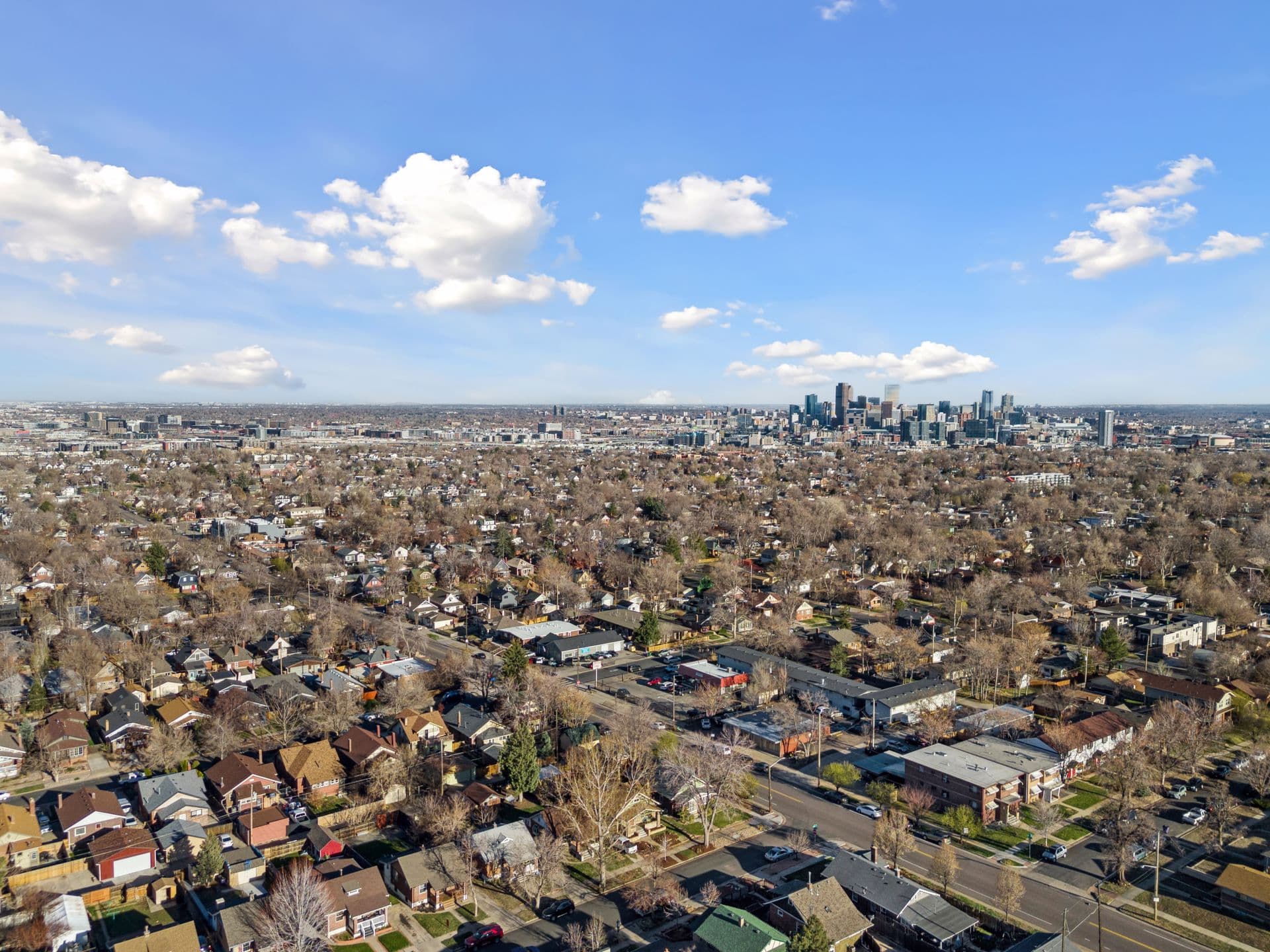
Denver has been on the receiving end of a major migration wave for the better part of 15 years, and for good reason. The city punches above its weight on quality of life, outdoor access, job market, and energy. But relocating anywhere is a big move, and Denver has its own set of nuances that matter before you commit.
I've helped out-of-state buyers land in Denver, some touring in person, some deciding largely over video. Here's what I tell every one of them.
First: Why People Move to Denver
The usual suspects come up in every relocation conversation, and most of them are legitimate.
The mountains are right there. Not figuratively. From most Denver neighborhoods, you can see the Front Range. Summit County ski resorts (Breckenridge, Keystone, Arapahoe Basin) are about 1.5 hours away, with Vail another 30–45 minutes beyond. People who grew up skiing twice a year move here and go 30 times. It changes your winters.
The sunshine is real. Denver's famous "300 days of sunshine" reputation is only barely an exaggeration. Even in December you'll have crisp, clear days. Snow typically melts off pavement within a day or two.
A real job market. Denver has a diverse economy (aerospace, tech, healthcare, energy, financial services, government), and it consistently attracts both employers and remote workers who can live anywhere but choose here for the lifestyle.
Genuine neighborhoods. Denver isn't one big sprawl. It has actual distinct neighborhoods, each with its own vibe, architecture, walkability, and price point. That matters a lot for daily quality of life.
What People Get Wrong About Denver Before They Move
They underestimate the altitude. Denver sits at 5,280 feet. Most people feel it the first week: headaches, dehydration, quicker sunburns, and some shortness of breath during exercise. For most people it passes within a few weeks. Drink more water than you think you need.
They assume it's always cold. It gets cold, but Denver's winters are genuinely milder than most of the Midwest and Northeast. The sunshine breaks up the cold, and temperatures rebound quickly after storms. The shoulder seasons, April/May and September/October, are some of the best weather in the country.
They focus on downtown and miss the neighborhoods. Denver's best residential neighborhoods are largely not downtown. Areas like the Highlands, Sunnyside, Berkeley, Wash Park, Park Hill, and Congress Park have the walkability, character, and community that people are actually looking for.
They think everything is cheap. It's more affordable than San Francisco or Seattle, but Denver is not a cheap city. Home prices, rent, and overall cost of living are above the national average. Budget accordingly.
Denver Neighborhoods Worth Knowing for Relocators
One of the first questions I ask a relocating buyer is: What does a good Saturday look like for you? The answer almost always points to a neighborhood.
If you want walkability and character: The Highlands (both LoHi and West Highland) offers some of Denver's best restaurants, coffee shops, and a genuine walkable main street feel. It's close to downtown without being downtown. Homes here are mostly Victorians, bungalows, and infill new construction. Prices reflect the demand. Berkeley delivers a similar walkable feel around Tennyson Street, with bungalows and new builds side by side. And Cherry Creek is the polished version: high-end shopping and dining within walking distance, with condos, townhomes, and newer single-family homes at some of the city's highest price points.
If you want more space: Central Park (formerly Stapleton) and Washington Park offer larger lots, big parks, and an established neighborhood feel inside the city. For more space and more value per dollar, Arvada, Wheat Ridge, and Applewood give you bigger lots and more square footage without leaving the metro.
If you want the outdoors-first lifestyle: Golden, Morrison, and parts of Lakewood sit right up against the foothills, with trailheads close by and a straight shot to I-70 for ski days. Closer in, Edgewater and the Sloan's Lake neighborhood put you steps from Sloan's Lake itself, with the bonus of real city access and a quick run to the mountains. Evergreen takes it a step further and puts you in the foothills themselves, at elevation and among the pines, in exchange for a real commute into Denver.
If you're on a budget: Barnum, Westwood, and parts of West Colfax on Denver's west side, along with Harvey Park in southwest Denver, offer entry-level price points and some of the best upside in the metro. These aren't the neighborhoods you'll find in travel guides yet, but they're where the market is heading.
If you want suburban polish: The southern suburbs (Cherry Hills Village, Greenwood Village, Castle Pines) are where you'll find the larger homes, bigger lots, and manicured streetscapes. Higher price points, but the space and infrastructure are hard to argue with.
Denver Cost of Living: The Real Numbers
Cost of living depends heavily on your lifestyle and where you're coming from. Here's a grounded look:
Housing is the biggest variable. The median home price in Denver proper is right around $600,000, per DMAR's latest Market Trends report. In-demand neighborhoods (Highlands, Wash Park, Congress Park) often trade well above that. The suburbs have a wider range: you can find newer construction with more square footage for less once you get outside city limits. I break down the full budget picture in Cost of Living in Denver.
Rent for a 2-bedroom apartment in Denver proper runs roughly $1,800–$2,800/month depending on the neighborhood and building. Newer construction commands a premium. Some outer neighborhoods and suburbs will be lower.
Property taxes in Colorado are relatively low compared to Texas, Illinois, or California. The effective rate in Denver typically works out to roughly half a percent of a home's market value per year, which is a meaningful advantage for homeowners.
State income tax is a flat 4.4%, lower than California, Oregon, and most of the Northeast.
Gas and utilities skew slightly higher than the national average. Heating costs in winter are real. Electric vehicles are very popular here, partly because Colorado has significant EV incentives.
Timing Your Move and Home Search
The market is always changing, but there's a rhythm to the seasons. If you have any flexibility on timing, here's what I'd tell you:
Spring (March–May) is the most competitive buying season in Denver. Inventory picks up but so does buyer demand, and you'll likely encounter multiple offers on desirable properties. Prices generally peak in this window.
Summer (June–August) stays competitive but slows as it goes. School-calendar buyers are active, and this is typically when out-of-state relocators are moving, so you have company in the market. At the same time, plenty of local buyers are traveling or on vacation, so homes move a little slower and pricing softens for sellers. There's less inventory, but if you're the buyer who stays engaged while everyone else is at the lake, summer is a real opportunity to find a deal.
Fall (September–November) is the second wave of listing activity. Sellers who want to be sold before the holidays list in September, so fresh inventory hits the market, and as the season winds down, motivation rises and negotiating leverage shifts toward buyers.
Winter (December–February) has the least inventory but also the least competition. Well-priced homes still move quickly, but you'll find fewer bidding wars. And watch the first couple weeks of January: there's usually a spurt of activity as withdrawn November and December listings come back to market and new-year sellers make their move, with buyers stepping back in right alongside them.
Buying a Home Before You Move: How It Actually Works
The most common question I get from out-of-state buyers is whether they can buy a home before they've relocated, without making a blind leap.
Yes, and it happens regularly. Here's how:
Video tours. I do FaceTime and Zoom walkthroughs for out-of-state clients. I'll walk through a home the way a buyer would: showing the street, the light, the ceiling heights, what the finishes actually look like versus the listing photos, and what the neighbors' properties look like.
A pre-scout trip. If you can spend a long weekend in Denver, I'll put together a tight schedule: 6 to 8 homes, plus a neighborhood driving tour to help you develop a spatial sense of where things are relative to each other and to your office or daily needs.
Targeted criteria. Before you set foot in Denver (or before I walk through homes on your behalf), we spend time on your true priorities: commute tolerances, space needs, school situations, outdoor access, budget ceiling vs. budget reality. This narrows the field fast and keeps the process from feeling overwhelming from 1,500 miles away.
Inspection and due diligence. I coordinate local inspectors you can trust, and I attend inspections in person and report back. You're not operating blind.
My job with a remote buyer is simple: keep the communication tight enough that you never feel like you're flying in cold.
What to Do Before You Start Your Denver Home Search
A few practical steps that make the process go smoother:
Get pre-approved before you do anything else. Serious sellers want to see pre-approval letters. In a competitive market, submitting an offer without one is a real handicap. Talk to a lender early. I can connect you with Denver-based lenders who know the local market.
Clarify your commute situation. If you're working in a specific office location, map commute times from different neighborhoods at your actual commute hours. Denver traffic, especially on I-25 and I-70, can be brutal. A 12-mile drive can take 45 minutes in the wrong direction at the wrong hour.
Visit if you can, even briefly. Even a 48-hour trip to walk neighborhoods and see a handful of homes shifts your understanding considerably. The way a neighborhood feels at street level doesn't fully translate through Zillow.
Be honest about your timeline. If you have a hard move date tied to a job start, we work backward from that. If you have flexibility, we can be more patient about finding the right property.
Ready to Start?
Whether you've got a move date locked in or you're still in the early "what if" phase, the earlier you start the Denver conversation, the better positioned you'll be. And if you're still weighing the decision itself, start with the honest version in Pros and Cons of Living in Denver.
Send me a message and tell me where you're coming from, what's pulling you to Denver, and what a good landing looks like. We'll take it from there.

About the Author
Scot Conti
Broker Associate at West + Main Homes. Berkeley resident, former architectural photographer, and your guide to Denver Metro real estate.

Have Questions?