

Market Report · June 2026
Denver Market Snapshot: May 2026
Average sales price up 3.3% year-over-year. Inventory is tightening. Rates remain the primary obstacle to affordability — not prices. Here's what the May 2026 numbers actually say.
Data current as of May 2026. Source: West + Main Homes, Denver Metro MLS.
Denver Metro at a Glance: May 2026
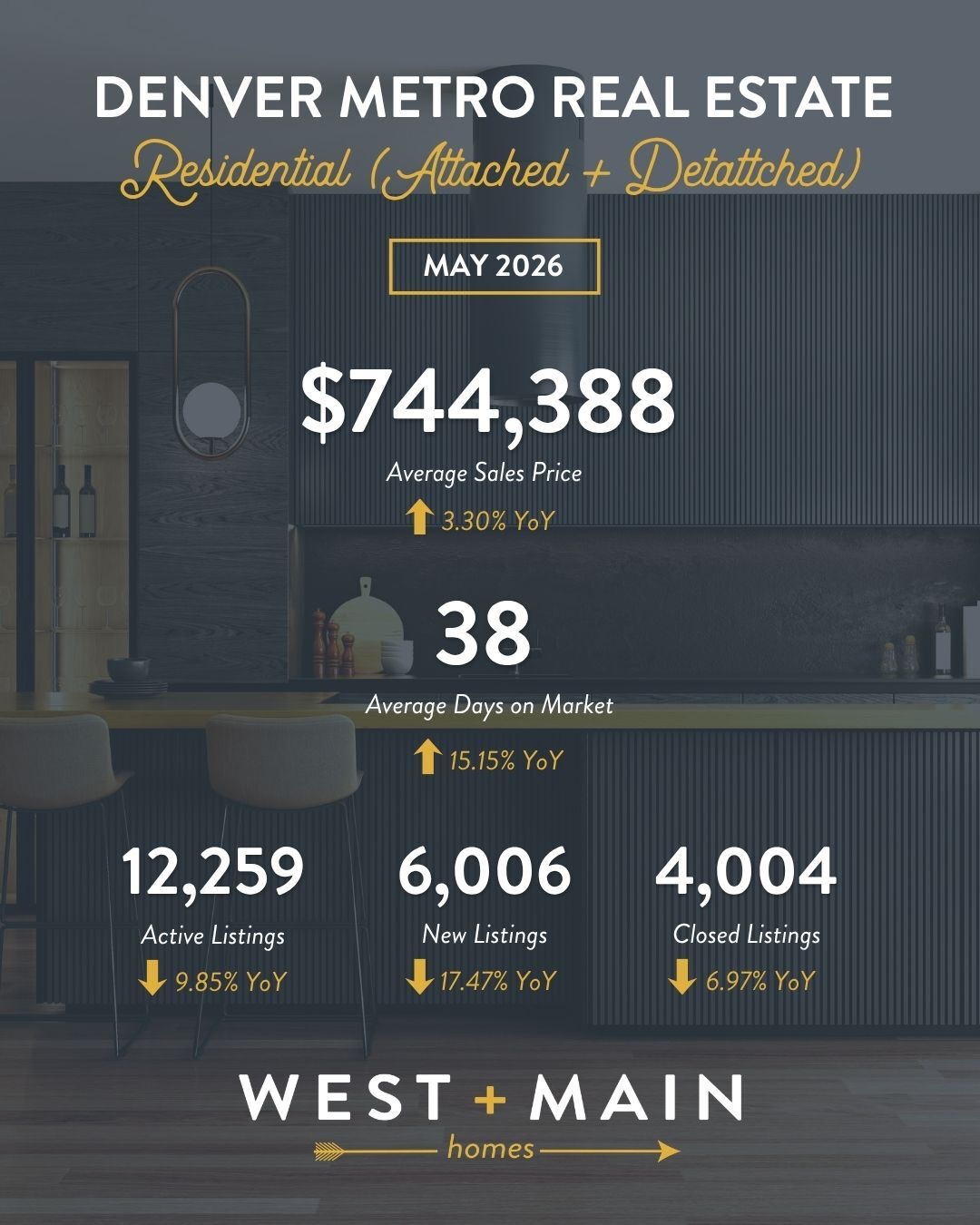
All residential properties (attached + detached combined):
| Metric | May 2026 | Year-over-Year |
|---|---|---|
| Average Sales Price | $744,388 | +3.30% |
| Average Days on Market | 38 days | +15.15% |
| Active Listings | 12,259 | -9.85% |
| New Listings | 6,006 | -17.47% |
| Closed Sales | 4,004 | -6.97% |
By Property Type
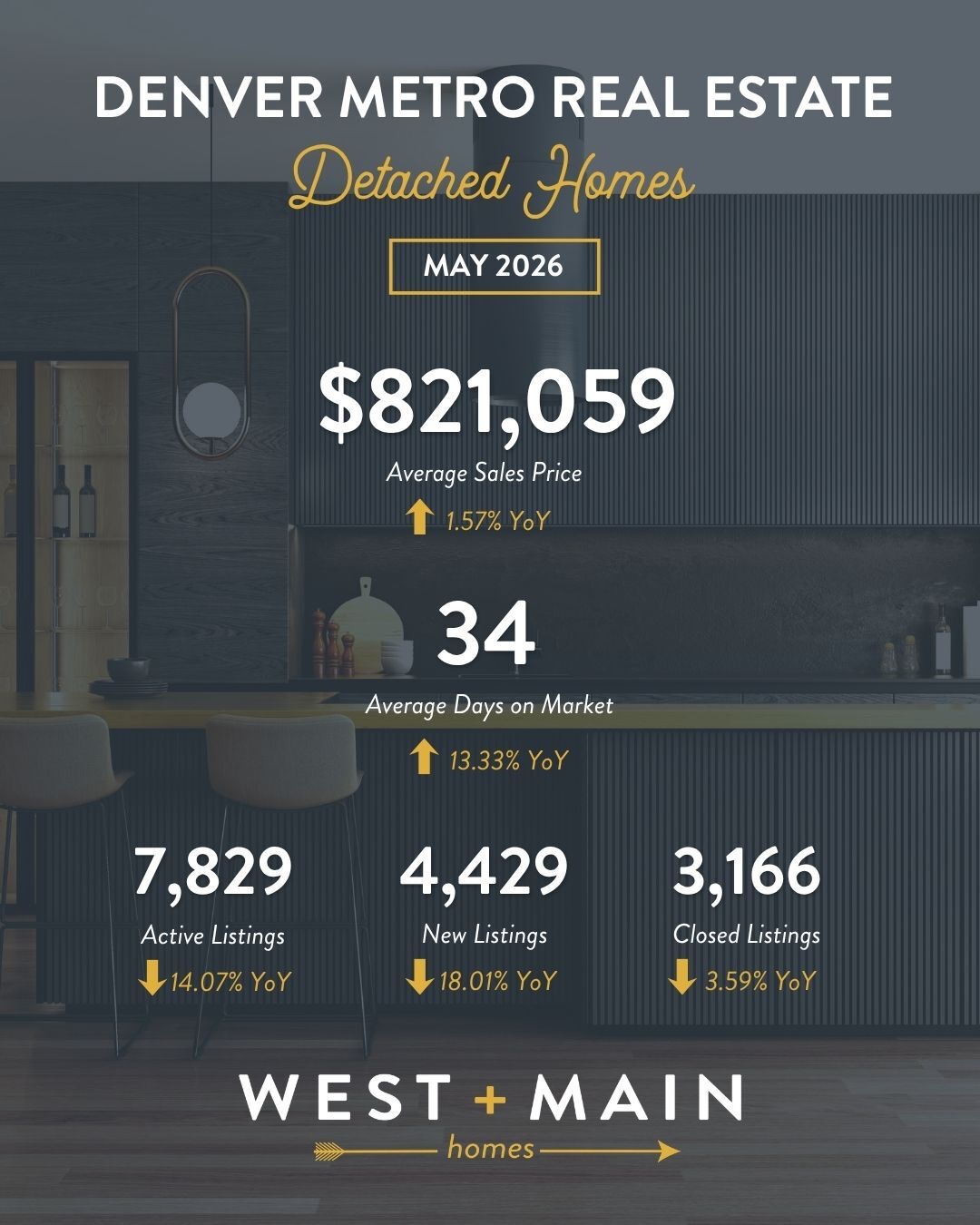
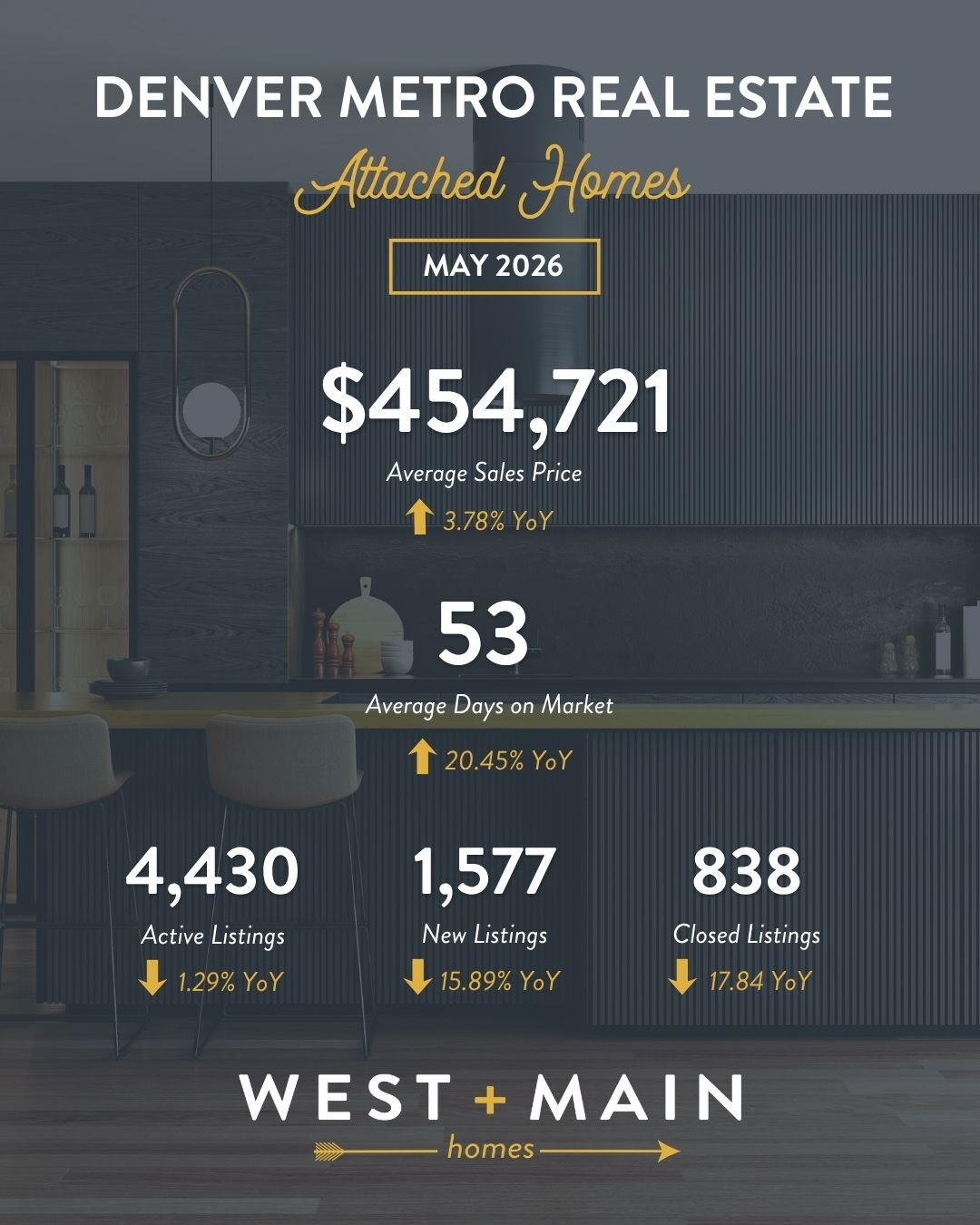
| Property Type | Avg Sale Price | YoY | Avg Days on Market | YoY | Closed Sales | YoY |
|---|---|---|---|---|---|---|
| Detached (Single-Family) | $821,059 | +1.57% | 34 days | +13.33% | 3,166 | -3.59% |
| Attached (Condo / Townhome) | $454,721 | +3.78% | 53 days | +20.45% | 838 | -17.84% |
| All Residential | $744,388 | +3.30% | 38 days | +15.15% | 4,004 | -6.97% |
What the Numbers Say
Prices are up a modest 3.3% year-over-year, well below the roughly 6% annual appreciation Denver has averaged since 2017. That's not a hot market. It's a cooling one, with prices still moving up.
The number that actually matters right now is days on market: up 15% year-over-year across all residential, and up more than 20% for attached homes specifically. That's the market's way of saying buyers have more time to think and sellers have less room for error on pricing.
Inventory is tightening year-over-year, but buyer demand has pulled back more. New listings are down nearly 18%. Closed sales are down 7%. The market is slower in volume, not in price.
The Rate Story
The affordability problem in Denver isn't prices. It's rates. Consider this:
A buyer in March 2020 purchasing a typical Denver home with 10% down at 3.8% paid $1,866/month in principal and interest.
That same purchase today at 6.5% costs $3,498/month, an 87% increase in monthly payment over six years.
Of that $1,632/month increase:
- $918 comes from mortgage rate increases
- $714 comes from home price appreciation
Rates are doing more damage to affordability than prices are. A 1% rate reduction saves approximately $315/month on a typical Denver home.
That reframe matters for buyers trying to decide whether to wait for prices to drop. Prices aren't the primary driver of affordability pain. Rates are. And rates can be addressed through buydowns, negotiated seller concessions, and eventual refinancing. A price correction of similar magnitude would require a recession most economists aren't forecasting.
What This Means for Buyers
More inventory and longer days on market translate to more negotiating room than buyers have had in years. The days of waiving inspections on overpriced homes are over in most price ranges.
That said, well-priced, well-prepared homes in high-demand neighborhoods (NW Denver in particular) still move quickly. The slower market affects the middle of the distribution, not the top of it.
If you're waiting for prices to drop significantly before buying, you're likely waiting for something that isn't coming. The more productive question is how to structure the transaction — rate buydowns, seller concessions, timing — to improve your monthly position.
What This Means for Sellers
Pricing discipline is back. Homes that come in overpriced don't get rescued by a bidding war the way they might have in 2021–22. They accumulate days on market, draw price-reduction stigma, and eventually sell for less than they would have at the right price on day one.
Preparation matters more too. Buyers have options now. A home that shows poorly against its competition will sit, even in a low-inventory environment.
The entry-level attached market (condos and townhomes) is the slowest segment right now, with average days on market at 53 and up more than 20% year-over-year. If you're selling in that segment, price it right and give yourself time.
NW Denver Micro-Market
Berkeley, West Highland, LoHi, Sunnyside, and Sloan's Lake continue to perform above the metro average. Limited new construction, persistent walkability demand, and the neighborhood fundamentals that attracted buyers in the first place haven't changed. These neighborhoods see less volatility in slow markets because the demand base is broad and quality-driven.
For a current read on your specific block or property type, reach out directly.
This report draws from West + Main Homes brokerage data for the Greater Denver Metro MLS. Scot Conti is a Broker Associate with West + Main Homes, CO License #FA.100092023.
Want Reports in Your Inbox?
Subscribe to the Denver market note.
A short read on what's happening in Denver real estate. No spam, just data and perspective.